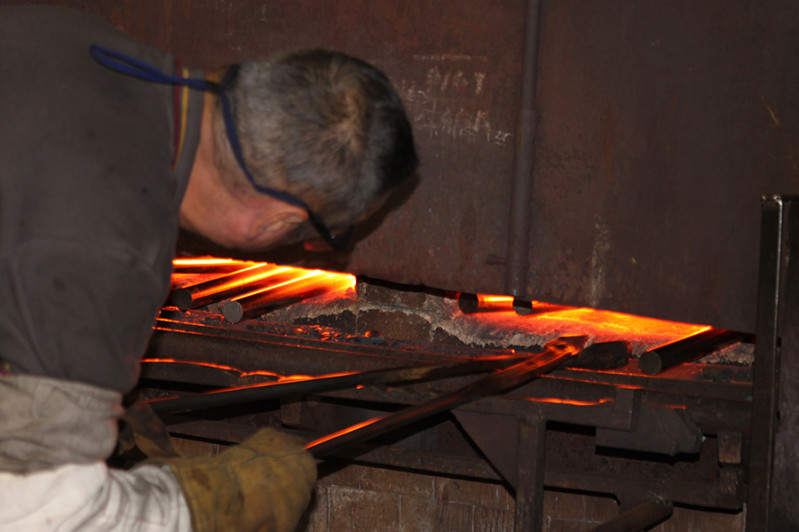
Once the metal has been selected and the mould prepared, the next stage in the closed-die forging process is thermal preparation. Heating the metal to the correct temperature is critical — too low and the metal will crack, too high and the material properties are compromised.
Why Does Metal Need to be Heated?
To prepare the metal for forging it needs to be heated to a precise desired temperature. This heating causes atomic displacement, restructuring the metal's composition through allotropic phase transformation. This process affects the metal's hardness, strength and ductility — making it workable in the dies.
The Heating Process
The metal is heated in a forge or furnace, typically requiring 10–15 minutes depending on the diameter and grade of the material. Workers then transport the heated billet using tongs directly to the forging machine.
Required Temperatures
Different metals and applications require different forging temperatures. Our standard operating temperatures are:
- Aero Steel Forging: 1,180°C
- Large Commercial Steel Forging: 1,230°C
- Brass Forging: 720°C
The 40-Second Window
Timing is everything. Once heated metal leaves the furnace, the forge operator has approximately 40 seconds to respond before the material cools below working temperature. If the metal drops below cherry-red colouration, it must be returned to the furnace for reheating — working with under-temperature metal risks part failure or breakage.
This precision and discipline, applied consistently for over 120 years, is why Victoria Forgings is trusted by aerospace and industrial clients worldwide.