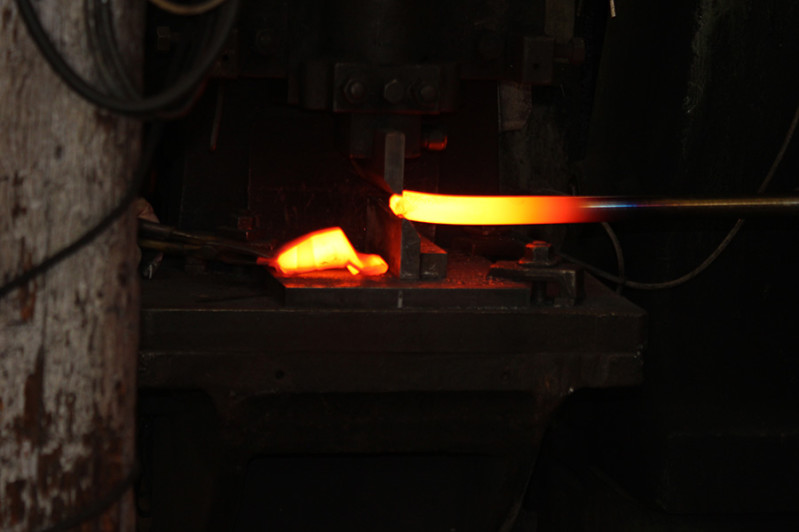
Following the metal forging stage, the component undergoes cooling and separation from the production bar through several distinct processes. This article covers the steps that take place once the die work is complete.
Clipping Excess Metal (Flash Trimming)
During closed-die forging, excess material called "Flash" is produced around the die parting line. This is removed using a trimming tool in a press adjacent to the forging hammer. The forgings then cool before advancing to the next stage.
Heat Treatments
Multiple heat treatment options exist depending on the design requirements and the intended application. The most common heat treatments applied to forgings are:
- Normalising
- Annealing
- Harden and Tempering
De-scaling
Following heat treatment, parts undergo de-scaling and inspection for surface defects and dimensional accuracy. This stage ensures the surface condition meets specification before any further processing.
Environmental Responsibility
Metal scrap generated during forging is fully recyclable. Offcuts and flash are collected, crushed and returned to steel mills for remelting and reformation into new bars — minimising waste throughout the process.
Health and Safety
The high temperatures involved create specific hazards during part handling. All workers are required to wear ear protection, safety glasses, steel-toed boots and flame-retardant personal protective equipment at all times in the forge area.
With over 120 years of forging experience, Victoria Drop Forgings maintains strict safety and quality standards at every stage of production. Contact us to discuss your closed-die forging requirements.